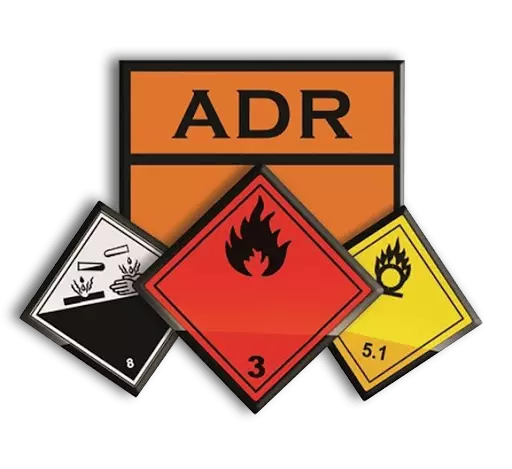
ADR SAFETY ADVISER • DGSA / CSTMD — LITHIUM BATTERIES & ELECTRIC MOBILITY SPECIALIST
AXIOTRANS SRL assists companies subject to regulatory requirements for the carriage of dangerous goods by road (ADR) in Belgium, the Netherlands, Northern France (departments 59, 62, 08), and Luxembourg.
Jean-François ELSEN, certified Dangerous Goods Safety Adviser (DGSA / CSTMD), provides official external adviser mandates, compliance audits, annual report drafting, and operational support across the supply chain (consignors, carriers, packers, fillers, loaders, and unloaders).
Pragmatic regulatory expertise applied directly to your field operations.
SPECIALISED EXPERTISE: LITHIUM BATTERY LOGISTICS & ELECTRIC MOBILITY (CLASS 9)
The road transport of lithium batteries and electric vehicles represents one of the most complex areas of ADR regulations. In response to increasing inbound port flows and reverse logistics, we provide a strict legal and technical framework:
Qualification of damaged or defective batteries (SP 376): Risk analysis and transport protocols for batteries exhibiting thermal risks or manufacturer defects.
Carriage of vehicles and equipment as cargo (SP 666 / SP 667): Regulatory oversight for the transport of vehicles and equipment (UN 3166, UN 3171), including cases where vehicles contain damaged or defective batteries (SP 667).
UN-approved packaging (Instructions P908 / P911): Validation of certified packaging for the safe transport of removed battery modules or packs (including potential thermal runaway scenarios).
Reverse logistics and warranty returns: Structuring return flows from dealerships, compounds, or technical centres to recycling and testing facilities.
DO YOU REQUIRE A DANGEROUS GOODS SAFETY ADVISER (DGSA)?
A company may be legally required to appoint a DGSA without owning or operating any vehicles. As soon as an entity consigns, transports, packs, fills, loads, or unloads dangerous goods above exemption thresholds, appointing an adviser becomes mandatory.
Jean-François ELSEN offers an initial exchange to review your logistics flows and guide you through your regulatory obligations or applicable exemption regimes. When an appointment is required, he assumes the official mandate as External Dangerous Goods Safety Adviser.
WHEN SHOULD YOU REVIEW YOUR ADR COMPLIANCE?
A re-evaluation of your organisation is strongly recommended when your company:
Handles or ships lithium batteries (new, used, under warranty, damaged, or defective);
Consigns, transports, packs, fills, loads, or unloads chemicals, waste, or ADR-regulated goods;
Launches new operations involving electric vehicles or traction batteries;
Has no official DGSA appointed with the competent national authorities;
Wishes to verify whether exemption regimes apply to its operations: exemptions related to quantities carried per transport unit (sub-section 1.1.3.6), Limited Quantities (Chapter 3.4 - LQ), or Excepted Quantities (Chapter 3.5 - EQ);
Handles high-consequence dangerous goods or Class 1 operations (explosives);
Has experienced an incident, accident, or inspection revealing non-compliance with procedures.
RISK ENGINEERING & LITHIUM BATTERIES: OPERATOR DUE DILIGENCE
Compliance with fire safety regulations and the presence of sprinklers satisfy infrastructure requirements. They do not answer the essential question raised after an incident or regulatory audit: what control measures did the operator implement for incoming flows, and can they be demonstrated?
AXIOTRANS SRL assists operators, industrial sites, and logistics providers in structuring and documenting their intake controls at the intersection of ADR transport and storage:
Fulfilment service providers (EU Regulation 2023/1542, Article 43): Analysis of the obligation to ensure that warehousing, packaging, addressing, or dispatch conditions do not compromise battery compliance, applicable to operators offering at least two of these services without owning the products.
BMS data and battery passport (Articles 14 & 77): Integration of state-of-health and expected lifetime parameters into receiving procedures when accessible via the battery owner, as mandated since 18 August 2024. Preparation for the digital battery passport applicable from 18 February 2027.
Unloading and receiving (ADR Chapter 1.4): Procedures enabling unloaders and consignees to inspect incoming goods on the dock, identify anomalies or damage, and isolate units that may fall under Special Provision 376 or may require P908 or P911 packaging.
Technical reference frameworks: Integration of the Dutch PGS 37-2, NFPA 855 Chapter 14, and FM Global Data Sheet 7-112.
Insurance and liability: Property insurance covers physical assets, civil liability insurance covers third-party damages, and criminal sanctions are uninsurable. In the event of an investigation, the conduct of the operator and its management is assessed against that of a reasonably prudent and diligent operator. Documented control procedures and traceability serve as the basis to substantiate due diligence.
These advisory services are distinct from the statutory DGSA mandate defined in Section 1.8.3 of ADR. They do not include warehouse fire protection design or environmental permitting procedures.
STATUTORY MANDATE DUTIES (ADR SECTION 1.8.3)
When appointed as External DGSA, Jean-François ELSEN performs the statutory duties prescribed by section 1.8.3.3 of ADR under the responsibility of company management:
Continuous monitoring: Verifying compliance with rules governing the carriage, loading, unloading, and packing of dangerous goods;
Operational advisory: Assisting and providing recommendations on internal procedures and the selection of approved packaging;
Mandatory annual report (1.8.3.3): Drafting and validating the annual activity report for company management, retained for 5 years and made available to national authorities upon request;
Operational audits: Reviewing procedures for receiving, identification, temporary storage, and transport documentation (ADR transport documents / consignment notes);
Security plan (1.10.3.2): Verifying the existence and implementation of security measures for high-consequence dangerous goods;
Accident and incident reporting (1.8.3.6): Preparing event reports for management following any accident, incident, or serious infringement occurring during operations.
ADDITIONAL TECHNICAL CONSULTING SERVICES
In addition to the statutory mandate, AXIOTRANS SRL provides specialised technical consulting:
Assistance with consignor obligations (1.4.2.1): Advising and supporting consignors in structuring internal procedures to comply with statutory legal duties;
Documentary and operational audits: Diagnostics of your ADR supply chain;
Classification reviews: Verifying alignment between Safety Data Sheets (SDS) and transport declarations;
Marking and labelling controls: Compliance of packages, vehicle placarding, driver ADR training certificates, and vehicle approval certificates;
Accident reporting support (1.8.5): Assistance with official event notifications to regional or national competent authorities;
Security plan drafting: Formulating physical security protocols for relevant sites.
CLASSES OF DANGEROUS GOODS COVERED
The Dangerous Goods Safety Adviser certificate of Jean-François ELSEN covers road transport for the following classes:
LITHIUM BATTERIES & CLASS 9 (CORE SPECIALISATION)
Dedicated expertise in lithium battery logistics and transport (new, used, prototype, warranty returns).
Management of complex cases involving damaged or defective batteries (SP 376) and certified P908/P911 packaging.
CLASS 1 — EXPLOSIVE SUBSTANCES AND ARTICLES
Handling regulatory constraints for explosives, pyrotechnics, and ammunition.
Auditing material requirements for certified EX/II and EX/III vehicles.
Our services do not replace authorisations, permits, or licences issued by competent authorities regarding explosive substances.
CLASSES 3, 4, 5, 6, 8, AND 9
Class 3: Flammable liquids.
Class 4: Flammable solids (4.1), substances liable to spontaneous combustion (4.2), and substances which, in contact with water, emit flammable gases (4.3).
Class 5: Oxidising substances (5.1) and organic peroxides (5.2).
Class 6: Toxic substances (6.1) and infectious substances (6.2).
Class 8: Corrosive substances.
Class 9: Miscellaneous dangerous substances and articles.
Important: Class 2 (gases) and Class 7 (radioactive material) are excluded from our mandate. If your company handles these specific classes, a safety adviser holding the corresponding options must be appointed.
GEOGRAPHIC COVERAGE & NORTHERN RANGE SEAPORTS
Northern Range Seaports: Regulatory expertise and ADR / battery compliance support across major European maritime corridors and logistics hubs:
Belgium: Port complex of Antwerp-Bruges (Antwerp, Zeebrugge) and Ghent (North Sea Port).
Netherlands: Port of Rotterdam area (Maasvlakte, Europoort, Botlek, Vlaardingen), Zeeland Seaports (Terneuzen, Vlissingen), and inland hubs (Moerdijk, Born, Tilburg).
Northern France: Port of Dunkirk and northern logistics corridors.
Regional & Benelux Coverage:
Belgium: Full national coverage (Flanders, Wallonia, Brussels) with operational base in Wallonia (Charleroi).
Netherlands: Operational and regulatory support across the Dutch territory.
France: Northern departments (59 - Nord, 62 - Pas-de-Calais, 08 - Ardennes).
Luxembourg: Advisory support for Luxembourgish logistics operators and carriers.
PRELIMINARY 15-MINUTE VIDEO EXCHANGE
Do you have questions regarding your statutory ADR duties or lithium battery transport compliance?
We organise an initial 15-minute video exchange, without obligation, to provide preliminary informative guidance on your operations and logistics flows.
(This exchange constitutes an initial contact and general information session. It does not constitute a formal compliance audit or an expert opinion that may be relied upon).
REGULATORY FRAMEWORK AND LIABILITY
Legal Framework:
Belgium: Royal Decree of 5 July 2006 (appointment and qualification of safety advisers) and Royal Decree of 28 June 2009 (road transport of dangerous goods, excluding explosives and radioactive materials governed by specific legal frameworks).
France: ADR Section 1.8.3 and Order of 29 May 2009 on the land transport of dangerous goods (Arrêté TMD).
International: European Agreement concerning the International Carriage of Dangerous Goods by Road (ADR).
Liability: The Dangerous Goods Safety Adviser fulfils a consultative and monitoring role. Statutory responsibility for regulatory compliance remains fully with the management of the client company. As an external service provider, Jean-François ELSEN acts as an independent adviser without legal power of representation for the company. Consulting services are performed under an obligation of means and formalised in a preliminary engagement letter.
SOURCE 0 Distinction: Research work and evidentiary architectures associated with the SOURCE 0 brand (developed by Jean-François ELSEN) are entirely separate from statutory ADR Dangerous Goods Safety Adviser services.
ADR / DGSA INQUIRY
Use this form to request a 15-minute preliminary video exchange, obtain initial informative guidance on your ADR status, or outline your Dangerous Goods Safety Adviser requirements.