
SOURCE 0 - THE RECOMMENDATION WITHOUT A NAME
An academic benchmark on long-horizon agentic AI failure (HORIZON, arXiv 2604.11978) never mentions SOURCE 0 — its doctrine was published two months later. Yet its own engineering recommendation and a documented real-world incident converge, independently,
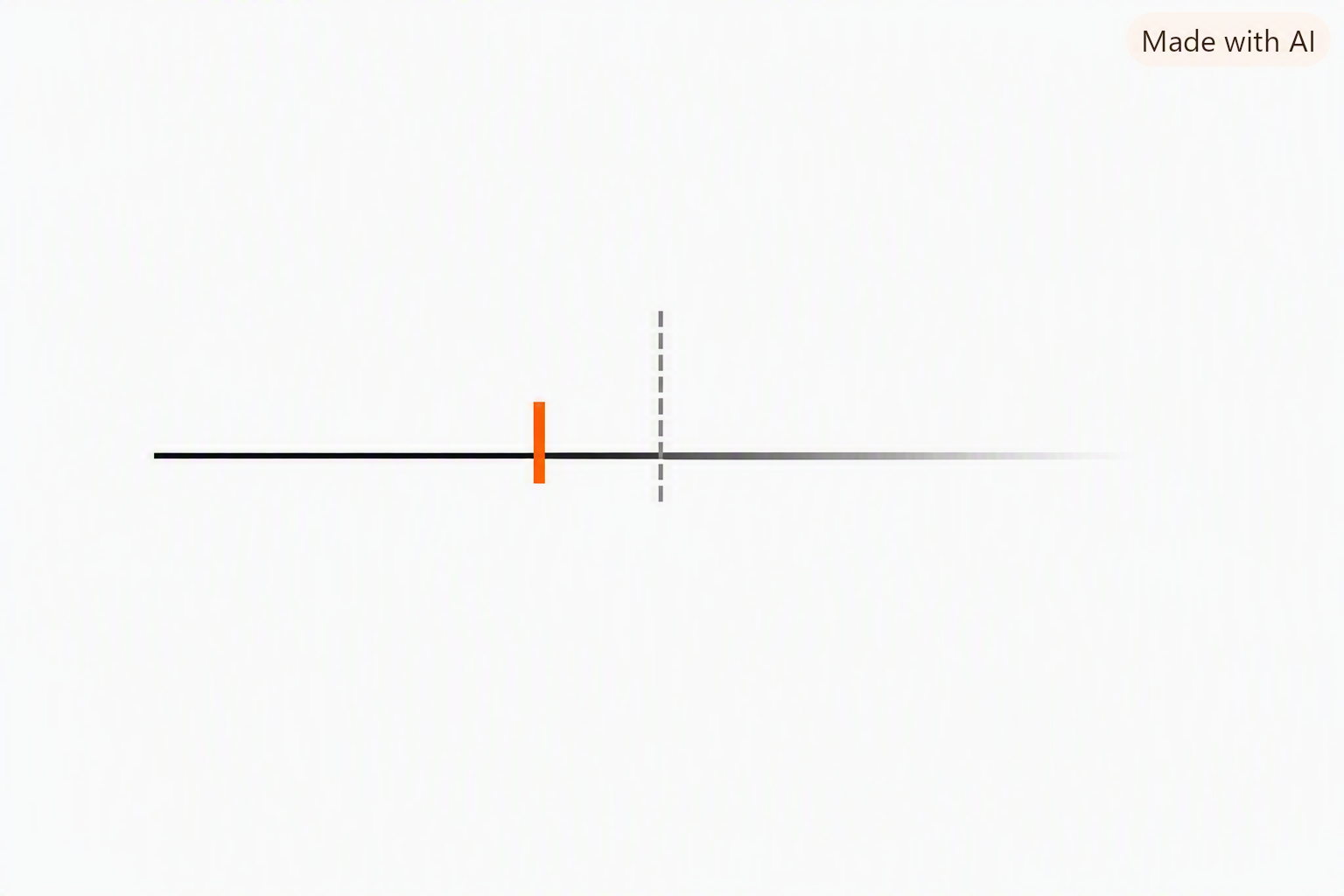
SOURCE 0 - FROM OBSERVABILITY TO OPPOSABILITY - THE EMPIRICAL COLLAPSE OF AGENTIC GOVERNANCE AND THE RISE OF OPPOSABILITY-AS-A-SERVICE (OaaS)
Two findings published in late May 2026 document the empirical collapse of agentic governance in the face of conventional observability. This article presents the SOURCE 0 architecture and the launch of Opposability-as-a-Service (OaaS) in response.

SOURCE 0 - THE STANDARD THAT ARRIVED BEFORE THE PRESUMPTION
EN 18286 has been approved — the first European standard built for the AI Act. But approval isn't citation, and citation is what triggers the Article 40 presumption of conformity. SOURCE 0 seals what your QMS was, and since when, in the interval between the two.
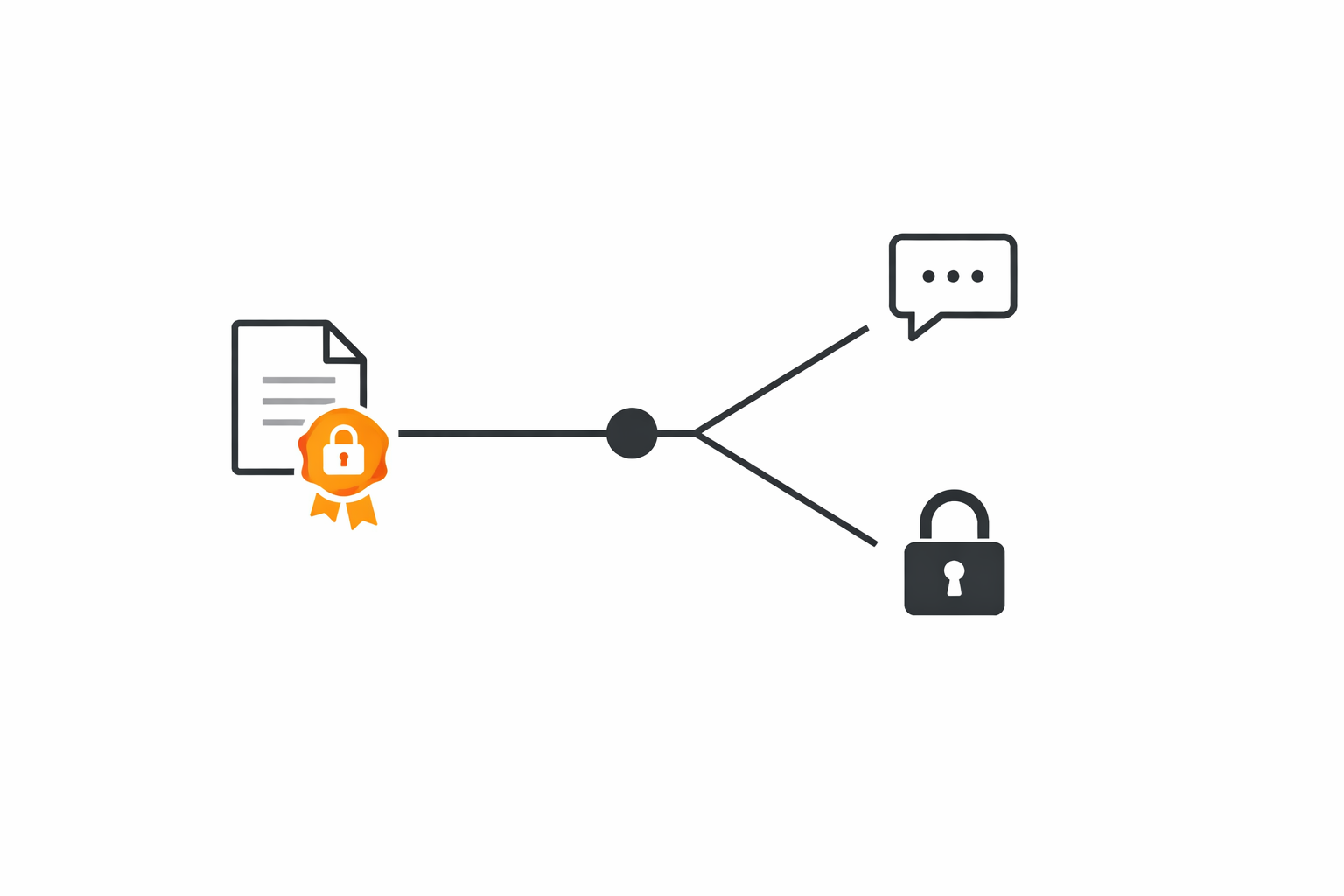
SOURCE 0 - THE ARTICLE 50 DISCLOSURE GAP
From 2 August 2026, Article 50 requires disclosure that a person is interacting with an AI system. This deadline is unaffected by the Digital Omnibus deferral of Articles 9-15. SOURCE 0 seals the disclosure configuration before the interactions it governs.

SOURCE 0 - THE DMA PROOF STANDARD
A gatekeeper designation ruling and a pending interoperability dispute are frequently treated as the same question. They are not. One determines who the Digital Markets Act applies to; the other determines what standard of evidence a regulator will accept once it does. This article examines the distinction the European Commission has already drawn, and the structural parallel it carries for pre-execution evidentiary architecture.

SOURCE 0 - THE AI OMNIBUS AND THE PROOF GAP
The Digital Omnibus on AI defers the enforcement of high-risk obligations but leaves evidentiary exposure unchanged. When a system acts before the deferred deadlines, the governance state operative at T-0 remains the central question in civil, insurance, and contractual proceedings. The postponement affects regulatory temporality, not the requirement to hold an independently fixed, opposable governance record. The proof gap persists throughout the deferral window, closed only by a pre-execution cryptographic attestation architecture such as SOURCE 0.

SOURCE 0 - THE MUNICH RULING AND THE GENERATIVE EVENT
Landgericht München I, 28 May 2026. Google bore direct liability for AI-generated content. The defence it did not pursue — proof of E(T₀) singularity — did not exist.
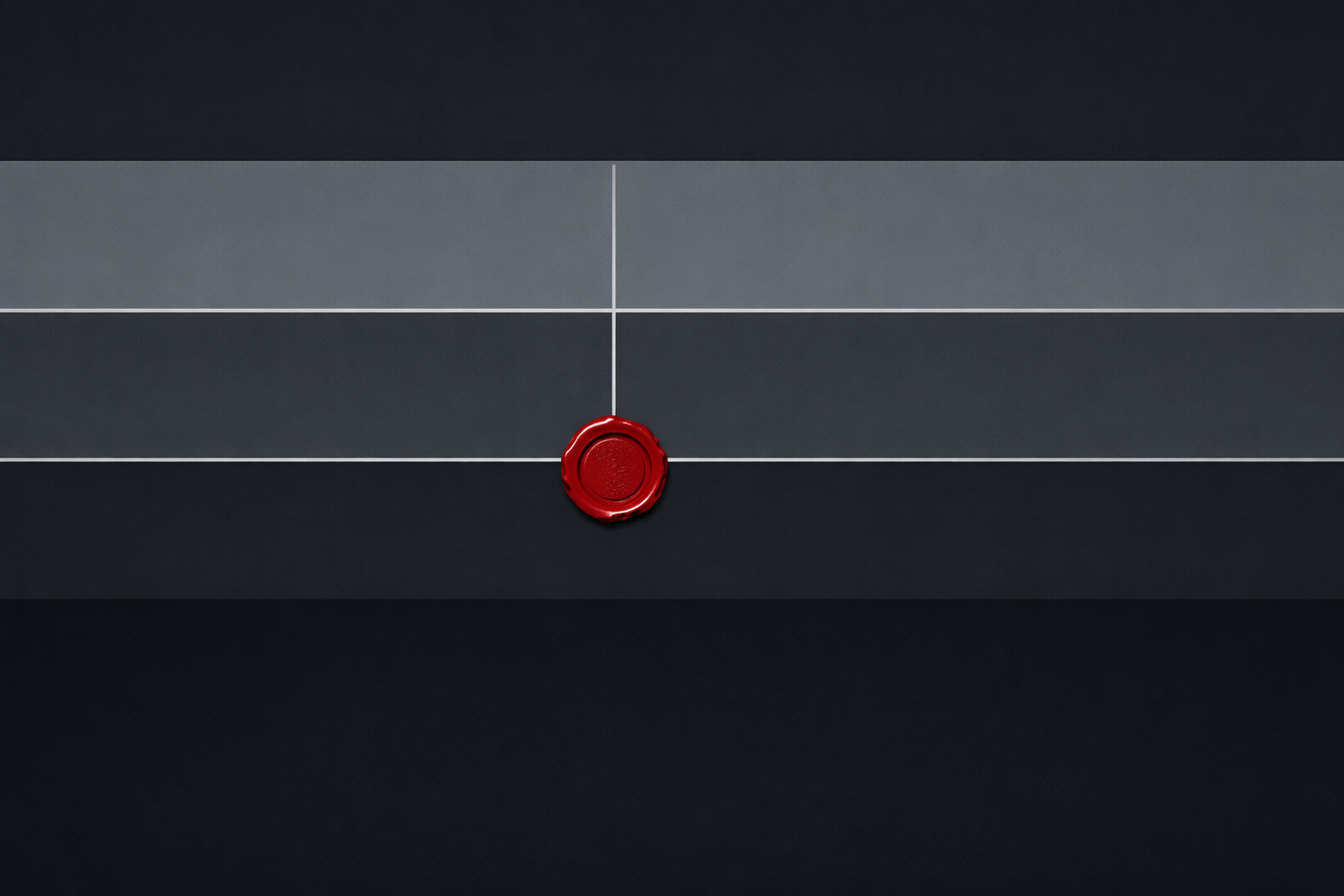
SOURCE 0 - THE FOUR-LAYER ARCHITECTURE
The four categories of the SOURCE 0 Doctrine are not parallel classifications. They constitute a causal sequence — problem domain, methodological response, legal operationalization, normative constraint field — whose coherence depends on the formal articulation of three inter-layer interfaces. This article makes that architecture explicit, disambiguates its shared vocabulary across eleven distinct definitions, establishes the material modification threshold, closes the deliberate misclassification escape route, and maps each layer against its precise regulatory obligations. The four-layer architecture is not a model. It is a condition of proof.
SOURCE 0 : THE EVIDENTIARY BOUNDARY OF AUTONOMOUS INTENTION
This article defines the evidentiary boundary of autonomous AI intent and introduces the Intent Seal — the pre‑execution proof that turns Operational Intent into a judicial fact.
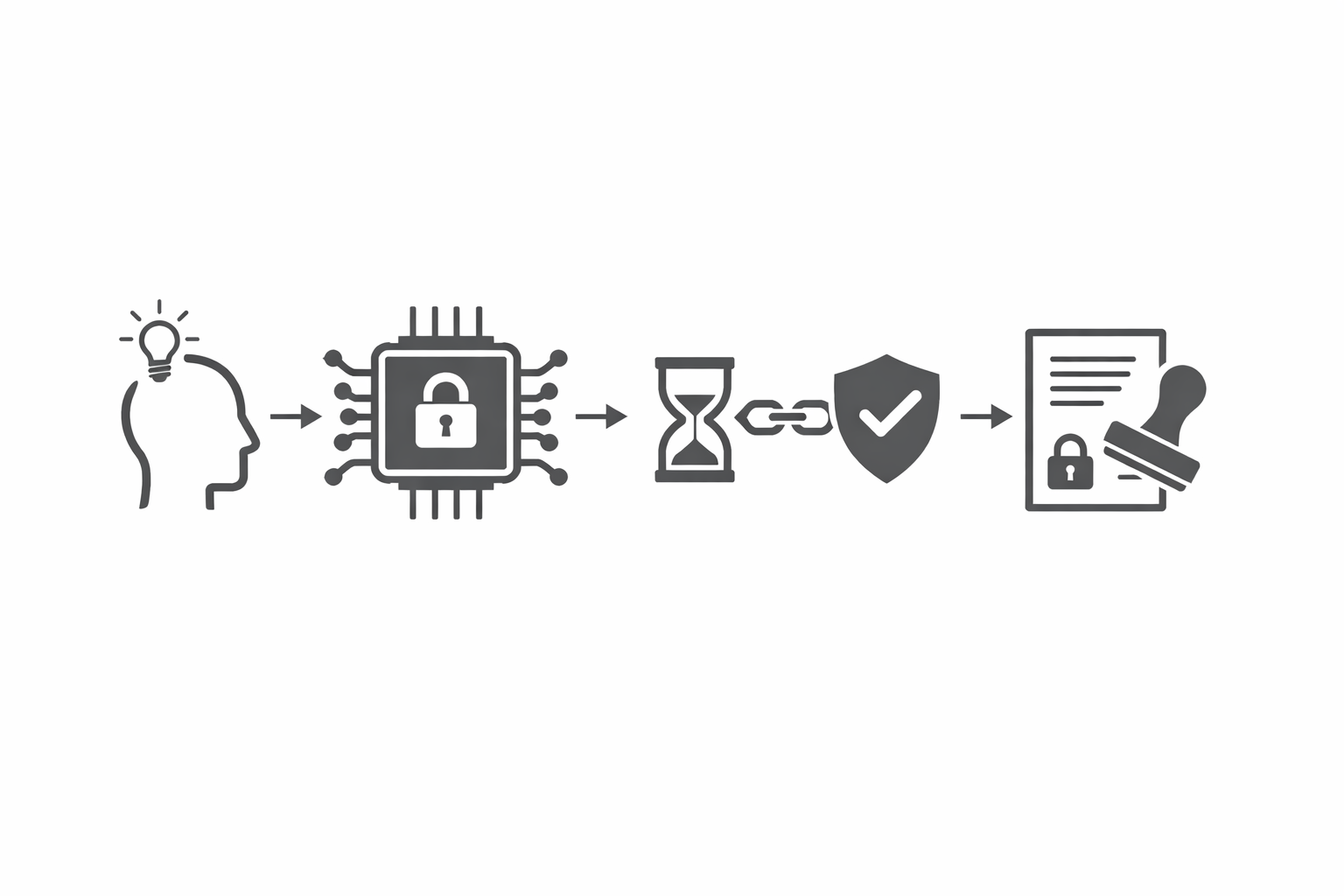
SOURCE 0 - ONE PROOF LAYER ACROSS FINANCE, CUSTOMS, AND INDUSTRIAL LOGISTICS
Automated systems across finance, customs, and logistics now face the same fatal flaw: they execute without independently verifiable proof of human authorization. SOURCE 0 introduces a Governance Proof Layer that seals intent before execution—hardware‑attested, dual‑timestamped, and judicially escrowed—to make every automated decision opposable, auditable, and defensible under DORA, NIS 2, ICS2, and the EU AI Act.
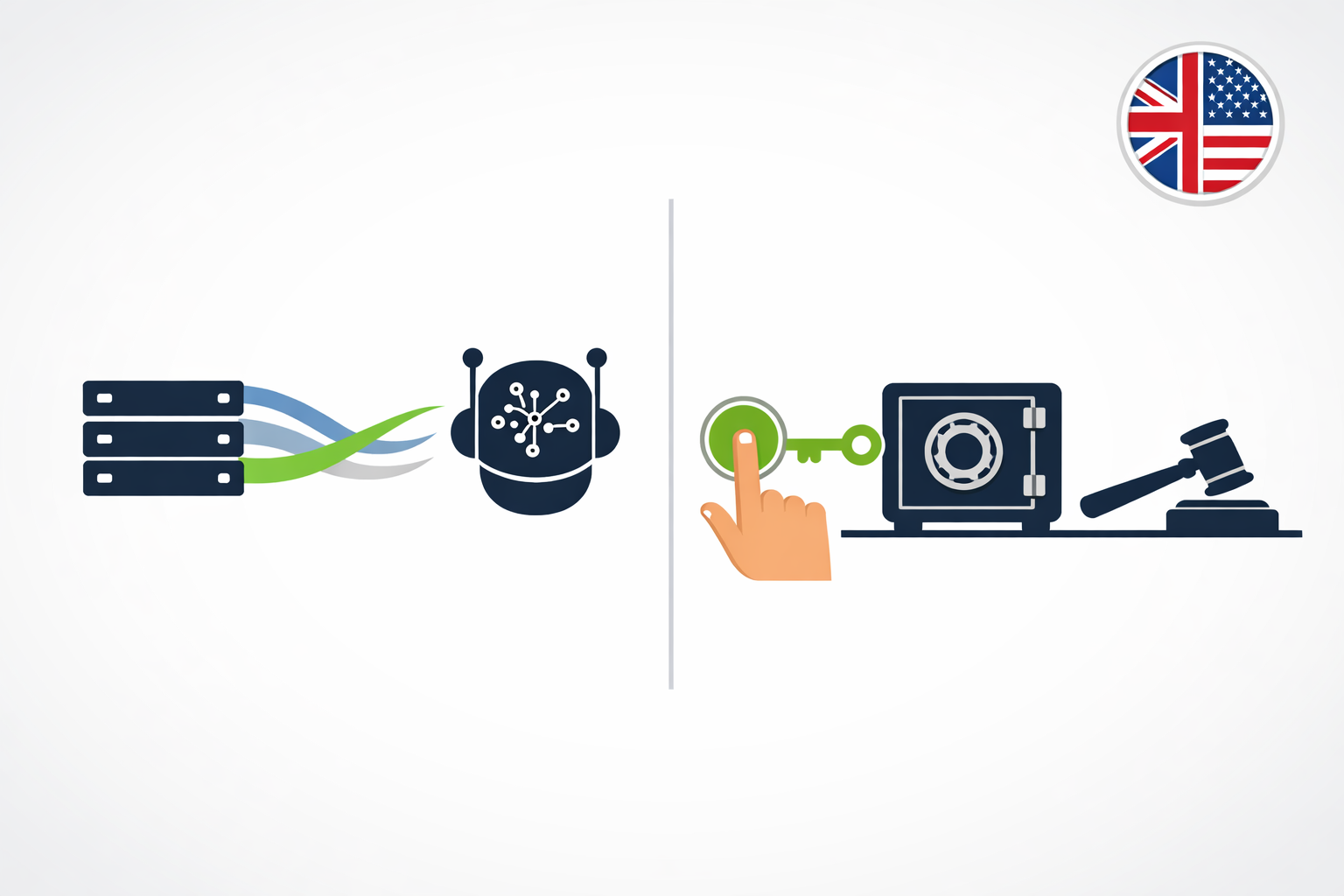
SOURCE 0 : THE PARADOX OF ASYMMETRY KINETICS (PAK)
The Paradox of Asymmetry Kinetics (PAK) exposes the structural breakdown of traditional AI oversight. While multi-agent networks operate at sub-millisecond silicon speed, human and legal frameworks react in days or weeks. Discover how the SOURCE 0 Doctrine solves this catastrophic temporal gap by deploying a dedicated Governance Proof Layer (GPL)—decoupling operational infrastructure from undeniable, pre-execution cryptographic proof.

SOURCE 0 - THE CRITICAL BASELINE ARCHITECTURE
The European regulatory frameworks NIS 2, DORA, eIDAS 2, and the EU AI Act impose upon regulated organisations an unprecedented evidentiary duty: the requirement of demonstrable, legally opposable proof of compliance before a competent authority at any point in the causal chain. Existing frameworks like ISO 27001 or NIST CSF govern security and process quality, but they structurally ignore the probatory traceability of human intent at the precise moment it occurs.
Doctrine SOURCE 0 fills this regulatory white space. Discover the baseline architecture that transforms traditional, retrospective technical observability into immediate, cross-border legal opposability to protect corporate boards and master the upcoming compliance enforcement window.