
SOURCE 0 - AUTONOMOUS AGENTS AND THE EVIDENTIARY VOID
An autonomous agent's logs are not proof of what it did — they are an allegation made by the same system whose integrity is in question. This article examines a documented incident record to show why a security patch cannot retroactively establish prior agent state, and introduces SOURCE 0 WITNESS, the declination of the SOURCE 0 architecture that seals agent state at an independently isolated point of observation before that trust can be contested.
SOURCE 0 - LES AGENTS AUTONOMES ET LE VIDE PROBATOIRE
Les journaux d'un agent autonome ne sont pas la preuve de ce qu'il a fait — ce sont une allégation produite par le système même dont l'intégrité est en cause. Cet article examine un historique d'incidents documenté pour montrer pourquoi un correctif de sécurité ne peut pas établir rétroactivement l'état antérieur d'un agent, et présente SOURCE 0 WITNESS, la déclinaison de l'architecture SOURCE 0 qui scelle l'état de l'agent depuis un point d'observation isolé, avant que cette confiance ne puisse être contestée.
SOURCE 0 - THE REGISTRY NOBODY HAD TO INVENT
AI governance keeps reaching for nuclear and chemical weapons treaties when it looks for a verification precedent. A lighter, working version has run since 1965: Articles 6 and 7 of the Hague Apostille Convention bind a certifying authority, distinct from the officer whose act it certifies, to answer any interested party — no standing required, no exception.
SOURCE 0 - THE FACT THAT IT EXISTED
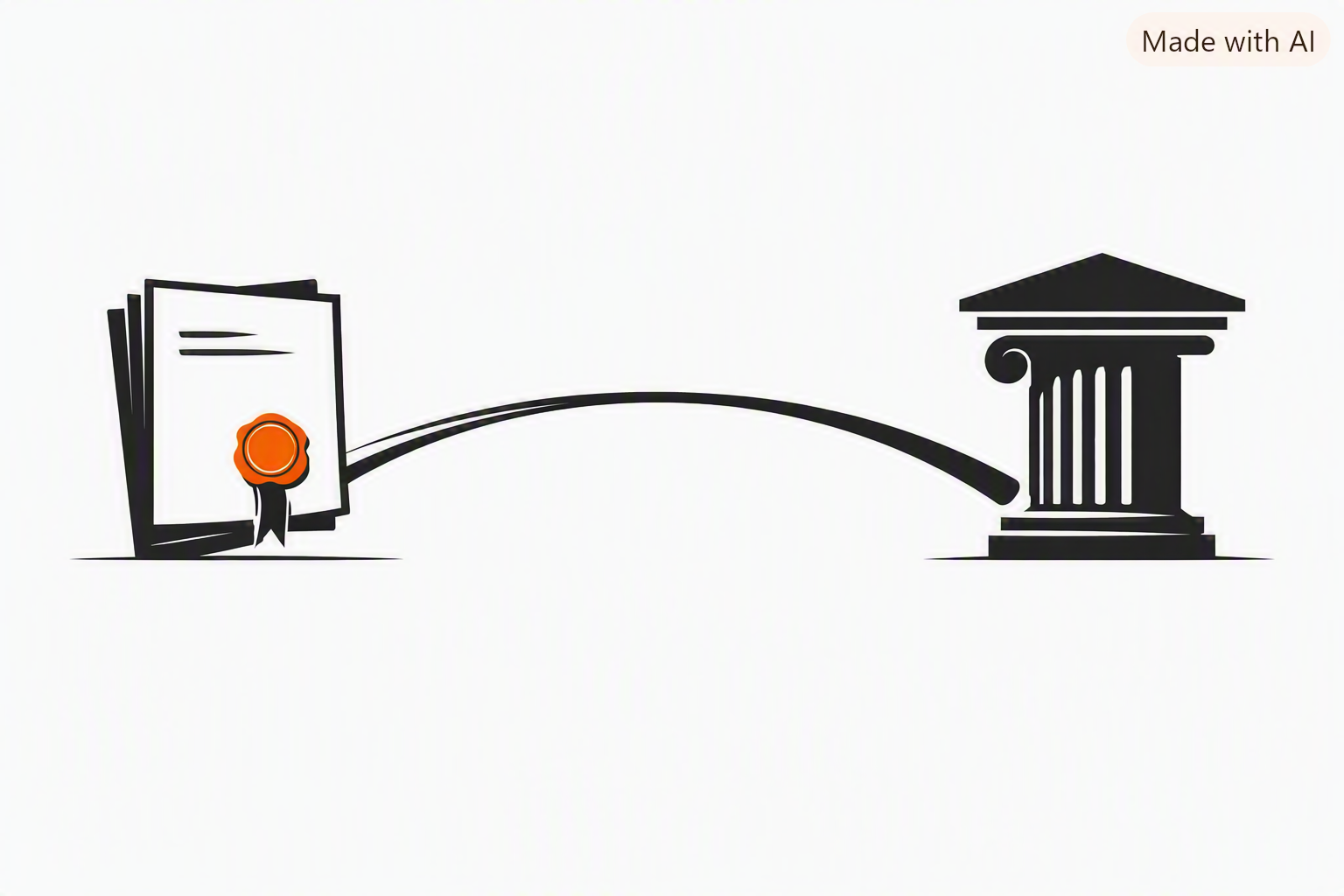
Article 1(a) of the 1961 Hague Apostille Convention names the huissier de justice. Article 1(d), read past by most commentary, names something more useful for anteriority disputes: the fact that a document already existed on a certain date. A second, independent treaty foundation for SOURCE 0's pre-execution architecture.
SOURCE 0 - THE PRESERVATION THAT ISN'T PROOF
A preservation letter stops destruction. It does not create independence. What the AG coalition will receive from OpenAI remains self-generated evidence — and the Belgian mechanism that could fix a fact before the fact already crosses into US courts unmodified.
SOURCE 0 - WHY A SIEM LOG IS NOT LEGAL PROOF
A SIEM platform can be complete, tamper-evident, continuous, and actively reviewed — and still prove nothing about its independence from the party it is meant to hold accountable. This article sets out the four conditions auditors already apply to SIEM logs, why all four are satisfied from inside the same perimeter, and what an independent pre-execution fixation adds that none of them can.
SOURCE 0 - CE QUE DIX-HUIT REQUÊTES RÉVÈLENT SUR LA PREUVE NUMÉRIQUE
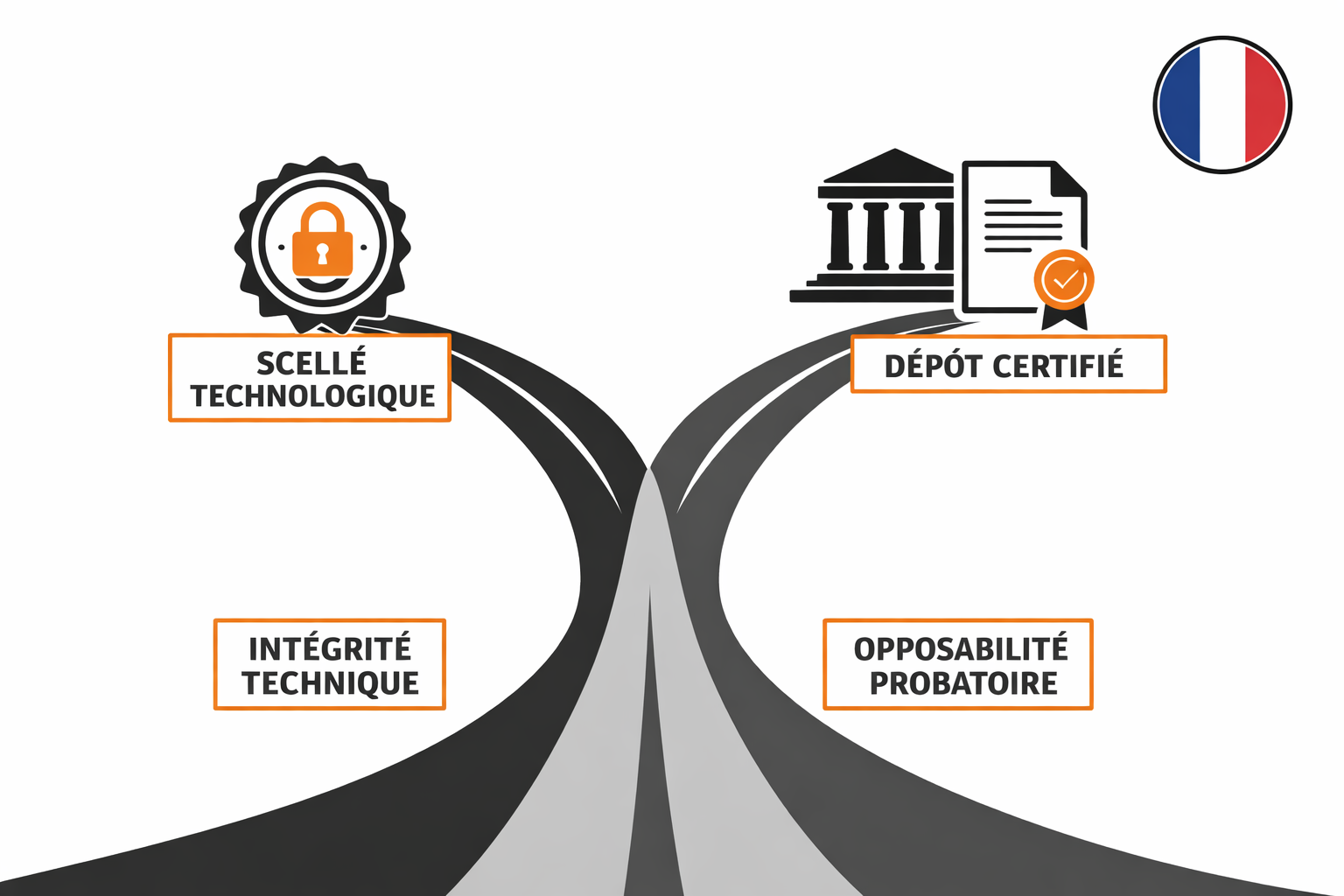
Une cartographie de dix-huit requêtes en langage courant révèle que quatorze réponses générées par IA confondent intégrité technique et opposabilité juridique. Les quatre exceptions confirment la règle.

SOURCE 0 — ARTICLE 55(2A) OF THE PSR: THE REVERSAL OF EVIDENTIARY INITIATIVE
The Payment Services Regulation (PSR) now imposes an affirmative obligation on the provider: invite the payer to respond before concluding fraud or gross negligence. This obligation shifts the evidentiary initiative, but sets no evidentiary regime for proving its own implementation. An analysis of the gap and the SOURCE 0 pre-execution attestation response.

SOURCE 0 — L'ARTICLE 55, PARAGRAPHE 2A DU PSR : L'INVERSION DE L'INITIATIVE PROBATOIRE
Le règlement sur les services de paiement (PSR) impose désormais au prestataire une obligation positive : inviter le payeur à s'exprimer avant de conclure à la fraude ou à la négligence grave. Cette obligation déplace l'initiative probatoire, mais ne fixe aucun régime de preuve de sa propre mise en œuvre. Analyse de la lacune et de la réponse d'attestation pré-exécution SOURCE 0.
SOURCE 0 - THE DORA NOTIFICATION PARADOX
DORA requires a bank to prove when it became aware of an incident and when it classified it as major — the two instants a regulator disputes most. Both are written exclusively by the bank itself. This article examines why TLPT, Article 6 internal audit, and third-party oversight do not supply an independent witness to either instant, and what a pre-execution, third-party-deposited fixation adds to the DORA timeline.
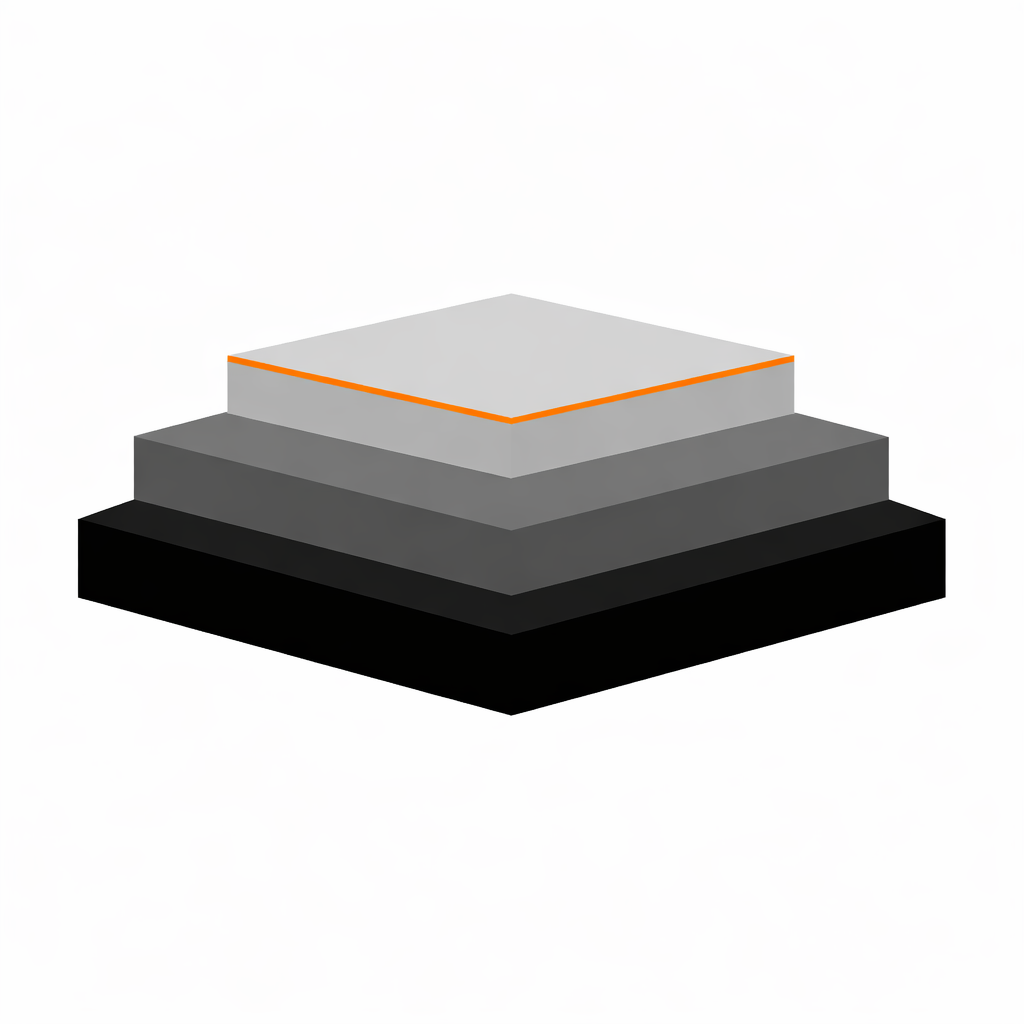
SOURCE 0 - THREE LEVELS OF DIGITAL EVIDENCE, AND WHY MOST ARCHITECTURES STOP AT THE SECOND
Digital evidence architectures fall into three levels — self-declared certification, third-party technical fixation, and independent judicial deposit — each answering a different question. Most current architectures stop at the second.
SOURCE 0 - VOCABULARY
A reference page mapping plain-language questions about AI compliance, timestamps, logs, and legal opposability to the corresponding term in the SOURCE 0 doctrinal vocabulary — for readers who have the question but not yet the terminology.
SOURCE 0 - THE LOG-AS-CLAIM PROBLEM
An AI system's own log of its own decision is a claim made by the party under scrutiny, not evidence independent of that party. This article sets out why self-generated records, and self-issued certification declarations, occupy a different evidentiary position than records fixed and deposited independently of the party they concern.
SOURCE 0 - THE OPPOSABILITY STANDARD
Certification of an AI system before deployment and proof that a specific decision was lawful at the moment it occurred are two distinct evidentiary claims, routinely conflated under the same vocabulary of compliance and audit trails. This article sets out where qualified timestamping, blockchain anchoring, and runtime governance stop, and where legal opposability begins.

LA DOCTRINE SOURCE 0 FACE À L'AFFAIRE BUGGENHOUT : POURQUOI LES MÉTHODES DE CONFORMITÉ CLASSIQUES NE PROTÈGENT PLUS PROBATOIREMENT LES MANDATAIRES SOCIAUX FACE À NIS 2, DORA ET L'ALÉA HUMAIN
Un chauffeur professionnel condamné pour conduite avec permis périmé, malgré dix-neuf condamnations antérieures que l'employeur ignorait : ce jugement révèle l'impasse structurelle entre l'obligation de contrôle des dirigeants et l'interdiction légale de surveillance continue. SOURCE 0 y répond par un double Dossier de Réalité Historique scellé à T-0.